
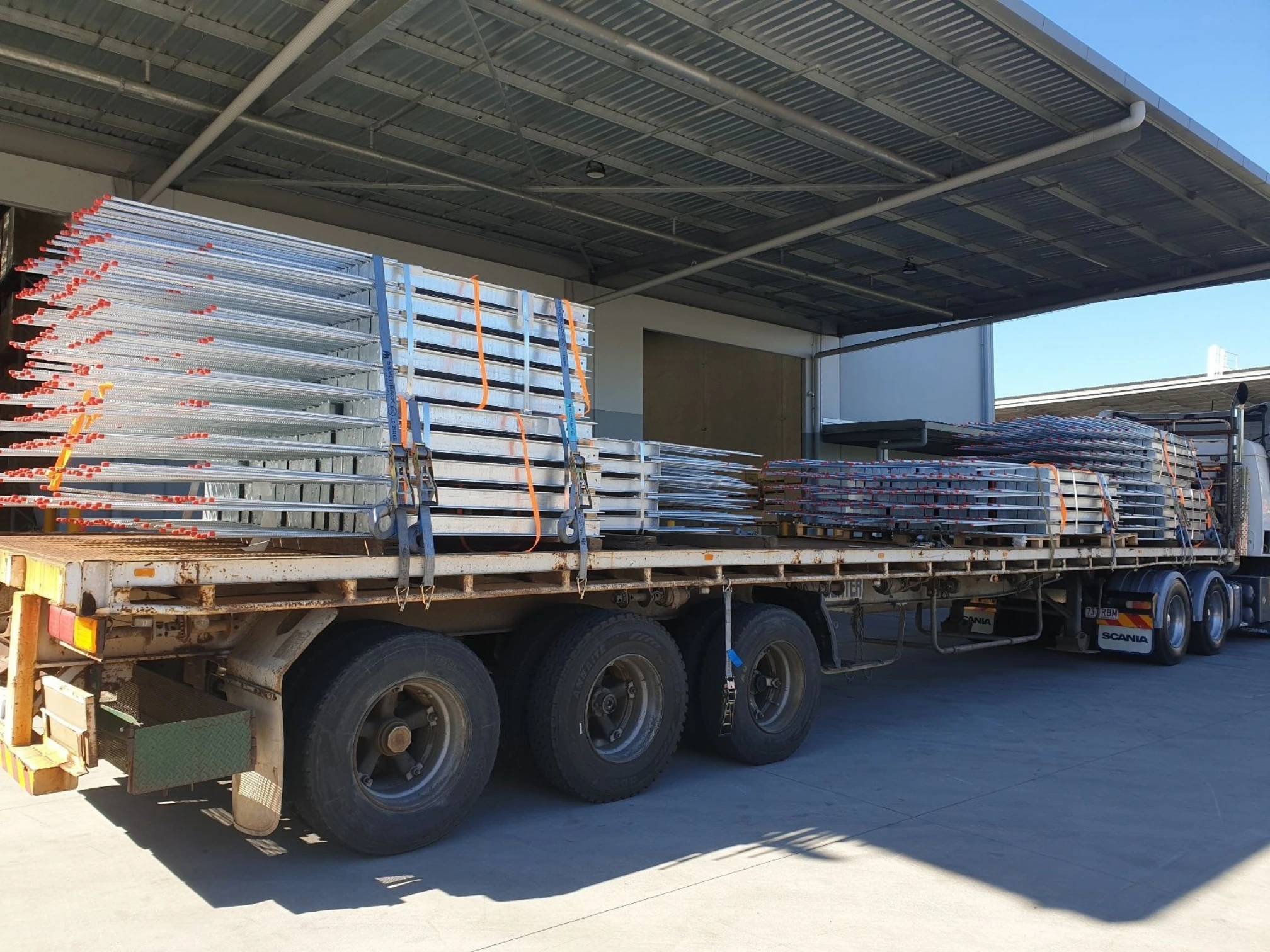
On most construction projects, the biggest delays do not come from the work itself. They come from waiting. Waiting for steel that is stuck at the port, for a truck that cannot get onto site, or for the wrong order to be replaced. Building material delivery delays leave crews standing idle, push back trades and can put a whole program at risk.
The good news is that many delays can be prevented with better planning and logistics. This guide explains why building material delivery delays happen and what builders, project managers, and suppliers can do to keep materials arriving on time.
What Building Material Delivery Delays Really Cost
A late delivery is rarely just a late delivery. The cost flows through the whole project:
- Idle labour. Crews and subcontractors are paid while they wait.
- Equipment hire. Cranes, hoists and other hired equipment cost money whether they are lifting or not.
- Program slippage. One late trade push back the next, and the effect builds across the project.
- Extra handling. Rushed or rescheduled deliveries often mean double handling, express freight, and higher costs.
- Contract risk. Delays can affect milestones, payment claims and, on some contracts, liquidated damages.
- Site safety. Rushed deliveries and congested sites increase the risk of incidents.
Common Causes of Building Material Delivery Delays
Building material delivery delays can occur at different stages of a construction project, from supplier lead times to site access issues. The table below outlines the common causes and practical steps to prevent them.
| Stage | Key actions |
|---|---|
| Pre-construction | Create a materials schedule, flag long-lead items, confirm lead times |
| Procurement | Place orders early, use clear purchase orders, plan import timelines |
| Storage | Arrange off-site warehousing for early or bulky materials |
| Delivery | Book windows, confirm access and unloading, share the site delivery plan |
| Tracking | Monitor shipments and act on exceptions early |
| Close-out | Organise returns, surplus stock and equipment collection |
8 Solutions to Reduce Building Material Delivery Delays
1. Plan Procurement Around the Construction Program
The most effective way to reduce delays is to plan materials early. Create a materials schedule linked to the construction program that shows when each item is needed on site, the supplier’s lead time, and the latest date it must be ordered.
- Flag long-lead items, such as structural steel, windows, cladding, lifts and mechanical plant, at the start of the project
- Allow extra time for imported materials and custom-made items
- Review the schedule regularly as the program changes
- Confirm lead times with suppliers in writing
2. Use Off-Site Storage and Staged Delivery
On tight urban sites, there is often no room to store materials. Ordering early solves the supply problem but creates a storage problem. Off-site warehousing bridges the gap.
With materials stored in a warehouse near your project, you can secure stock early, protect it from weather and damage, and call it forward in the order and quantities you need. This is often called staged or just-in-time delivery. For complex projects, just-in-sequence delivery goes a step further, delivering materials in the exact order they will be installed, floor by floor or stage by stage.
3. Plan Site Access and Unloading
Many delays happen in the last few hundred metres. Before each delivery, confirm:
- Delivery windows and any time restrictions, such as local curfews or school zones
- Truck access routes, turning space and height restrictions
- Loading zones and any council permits needed for street deliveries
- Crane, forklift and labour availability for unloading
- Where materials will be placed, so they are not moved twice
- A site contact who will be available to receive the delivery
Share a simple site delivery plan with every supplier and carrier so drivers know exactly what to expect.
4. Get the Order Details Right
Clear, accurate orders prevent rejected loads and repeat deliveries. Every purchase order should include:
- Exact product codes, specifications and quantities
- The delivery address, site entrance and site contact
- The required delivery date and time window
- Vehicle and unloading requirements, such as crane truck, side loader or forklift
- Any packaging, labelling or sequencing requirements
- Track Deliveries in Real Time
5. Track Deliveries in Real Time
When you cannot see where your materials are, problems are discovered too late. Shipment tracking and exception reporting are important parts of effective supply chain services, helping you identify delays early and adjust the site program before crews are left waiting. An online order and tracking portal also give project managers, suppliers and site teams one shared view of every delivery.
6. Consolidate Suppliers and Carriers
Large projects often involve dozens of suppliers, each using a different carrier. Consolidating freight through 3PL service provider reduces the number of trucks arriving on site, makes deliveries easier to schedule and gives you one point of contact when something changes.
7. Build in Contingency
- Hold buffer stock of critical, high-use items such as fixings, plasterboard and consumables
- Identify backup suppliers for key materials
- Allow float in the program for imported and custom items
- Agree in advance how changes to delivery dates will be communicated
8. Manage Returns and Equipment Movements
Delays do not only affect incoming materials. Surplus stock, returnable pallets, scaffolding and equipment also need to be collected and moved efficiently. Planning reverse logistics keeps sites clear and stops unwanted materials getting in the way of the next delivery.
Quick Checklist: Keeping Deliveries on Schedule
| Stage | Key actions |
|---|---|
| Pre-construction | Create a materials schedule, flag long-lead items, confirm lead times |
| Procurement | Place orders early, use clear purchase orders, plan import timelines |
| Storage | Arrange off-site warehousing for early or bulky materials |
| Delivery | Book windows, confirm access and unloading, share the site delivery plan |
| Tracking | Monitor shipments and act on exceptions early |
| Close-out | Organise returns, surplus stock and equipment collection |
How TLC Enterprise Supports Construction Projects
TLC Enterprise provides building materials logistics for builders, developers and suppliers across Australia. From our base in Truganina, in Melbourne’s western industrial corridor, we help keep materials moving to site on time with:
- Warehousing and distribution to store materials off site and deliver them when needed
- Just-in-sequence supply models that deliver materials in the order they will be installed
- Freight and transport management for deliveries to sites across Australia
- Freight forwarding and customs clearance for imported building materials
- A web-based portal for placing and tracking orders
- Reverse logistics for equipment and returns
- Dedicated account management with one point of contact for your project
Keep Your Building Material Deliveries on Schedule
If building material delivery delays are slowing your projects down, we can help you plan a more reliable supply chain.
Contact bookings@tlcenterprise.com.au or call 1300 343 751 to discuss your project.
Frequently Asked Questions
Common causes include long supplier lead times, import and port delays, incorrect orders, poor site access, missing unloading equipment, limited on-site storage, multiple uncoordinated carriers, and weather or traffic disruptions.
Plan procurement around the construction program, order long-lead items early, use off-site storage with staged delivery, plan site access and unloading, give suppliers clear orders and track deliveries in real time.
Just-in-time delivery means materials arrive on site shortly before they are needed, rather than being stored on site for long periods. It reduces clutter and damage but relies on reliable logistics and off-site storage.
Off-site warehousing lets builders secure materials early, protect them from weather and theft, and call them forward when needed. It is especially useful on tight sites with little storage space.