
Every business that moves goods internationally faces the same decision at some point: sea freight or air freight. The answer is rarely absolute. The right choice depends on the product, the timeline, the value of the shipment, and the cost the business can absorb.
Getting the comparison right before committing to a shipping method saves money on shipments that do not need to be urgent, and prevents costly supply chain delays on shipments that do.
The Core Difference
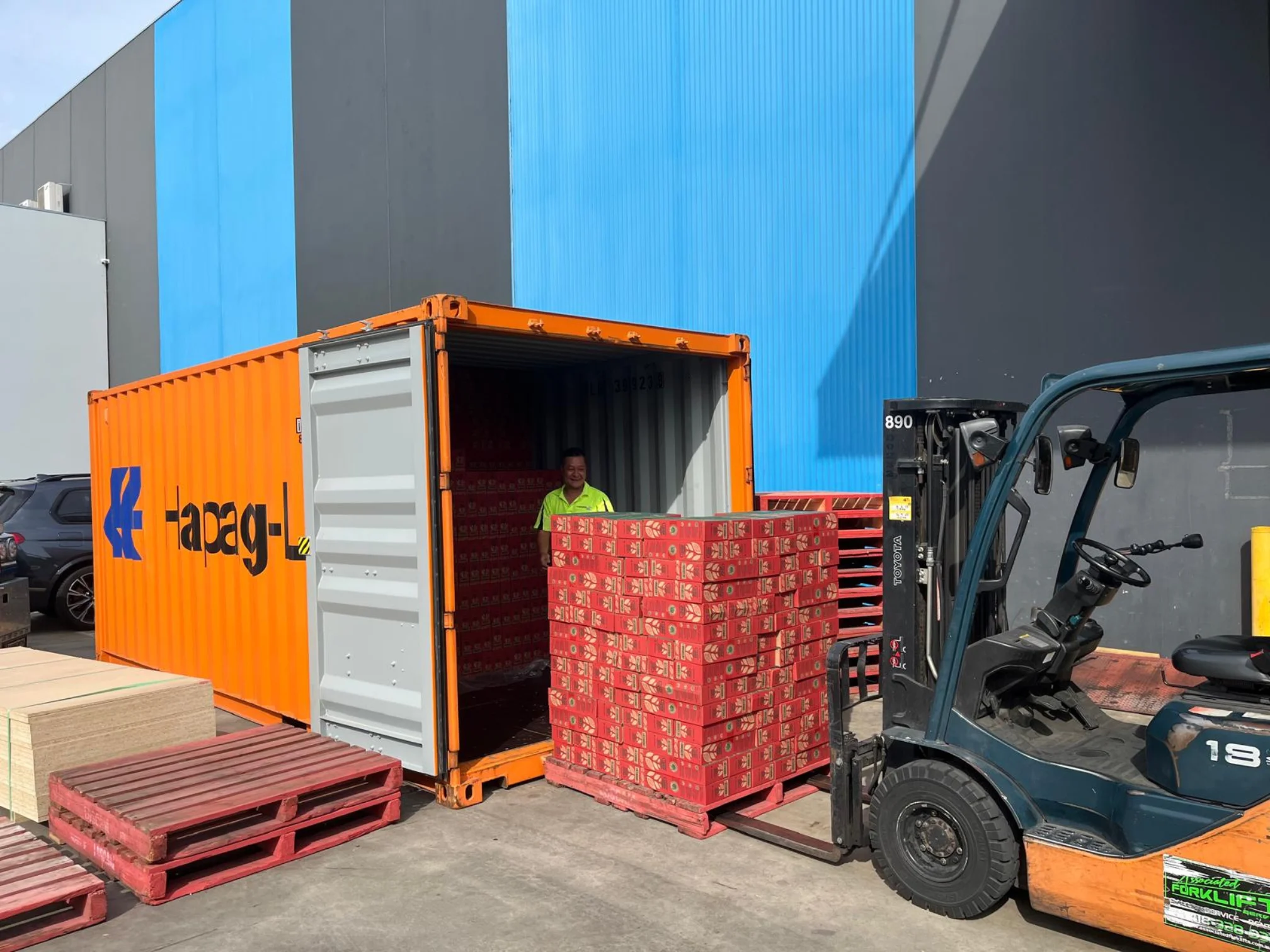
Sea freight moves goods in ISO shipping containers aboard cargo vessels. Transit times from Asia to Australia typically range from eight to twenty days depending on the origin port and shipping line. Air freight moves goods by commercial or cargo aircraft. Transit times from Asia to Australia typically range from two to five days.
Speed is the obvious difference. Cost and capacity are the less obvious ones.
When Sea Freight is the Right Choice
High Volume, Low Urgency
Sea freight is cost-effective for large volumes. A full container load (FCL) or a less-than-container load (LCL) consolidation moves significant quantities of goods at a fraction of the per-kilogram cost of air freight. For businesses importing stock on a planned cycle — seasonal inventory, replenishment orders, raw materials — sea freight is almost always the correct economic choice.
Heavy or Bulky Goods
Air freight pricing is weight and volume sensitive. Heavy or large goods — furniture, machinery components, construction materials, or bulk consumer goods — quickly become cost-prohibitive to ship by air. Sea freight removes that constraint. A full container load carries up to approximately 25,000 kg for a 20-foot container or 27,000 kg for a 40-foot container.
Non-Perishable and Non-Time-Sensitive Goods
Products that do not deteriorate in transit and are not required urgently — packaged food with long shelf lives, clothing, hardware, consumer electronics — are well suited to sea freight. The longer transit time is irrelevant if the arrival date can be planned into the procurement cycle.
When Air Freight is the Right Choice
Urgent or Time-Sensitive Shipments
Air freight is the correct choice when the goods must arrive faster than sea freight allows — whether due to a production deadline, a retail event, a stock outage, or a contractual delivery requirement. The cost premium is justified by the operational consequence of the alternative.
High-Value, Low-Weight Goods
Pharmaceuticals, electronic components, precision instruments, and luxury goods often have a high value relative to their weight and volume. The air freight premium represents a small percentage of the shipment value, and the reduced transit time lowers the period during which the goods are in transit and exposed to loss or damage.
Perishable Products
Temperature-sensitive or perishable goods — fresh produce, chilled food, live plants, and some pharmaceutical products — require fast transit to maintain product integrity. Air freight, combined with appropriate cold chain packaging, is the standard method for these categories.
Side-by-Side Comparison
| Factor | Sea Freight | Air Freight |
|---|---|---|
| Transit Time (Asia–Australia) | 8–20 days | 2–5 days |
| Cost Per Kg | Low | High — typically 4–6× sea freight |
| Volume Capacity | Very high — full or partial container loads | Limited by aircraft hold capacity |
| Best For | Bulk, heavy, non-urgent, planned shipments | Urgent, high-value, perishable, low-weight shipments |
| Carbon Impact | Lower per unit than air | Higher per kg than sea |
| Customs Process | Requires customs clearance at port | Requires customs clearance at airport — often faster |
Using Both: the Split Shipment Strategy
Many businesses use sea freight for regular stock replenishment and air freight for urgent top-up orders or fast-moving product launches. Running sea freight as the default and air freight as the exception controls overall freight costs while maintaining the flexibility to respond when urgency arises.
Planning import cycles accurately is the most effective way to reduce reliance on expensive air freight. A business that consistently uses air freight for non-urgent goods has a procurement planning problem, not a freight problem.
Need Help Choosing Between Sea and Air Freight?
TLC Enterprise provides sea freight and air freight forwarding for Australian importers and exporters — with carrier relationships across key trade routes and customs coordination support.
Call: 1300 343 751 | Email: bookings@tlcenterprise.com.au | View freight forwarding at TLC Enterprise
Frequently Asked Questions
Sea freight is typically four to six times cheaper per kilogram than air freight for shipments from Asia to Australia, depending on the route, carrier, and market conditions. The exact difference varies with fuel surcharges, port congestion, and demand. For large or heavy shipments, the cost difference is substantial. For small, light, high-value shipments, the difference may be less material relative to the shipment value.
Most goods can travel by sea freight. Exceptions include certain dangerous goods that are not permitted in containers, some live animals, and time-critical perishables that would deteriorate over the longer transit time. Specific dangerous goods classifications — lithium batteries, flammable liquids, and similar — have different packing and documentation requirements for sea versus air and should be confirmed with the freight forwarder before booking.
An LCL shipment combines cargo from multiple shippers into a single container. Each shipper pays for the space their goods occupy rather than the full container. LCL is cost-effective for smaller volumes that do not fill a full container (FCL) but still need the economics of sea freight rather than air. The trade-off is slightly longer transit time due to the consolidation and deconsolidation process at each end.
Yes. TLC Enterprise provides freight forwarding services covering sea freight and air freight for Australian businesses. Contact the team at bookings@tlcenterprise.com.au or 1300 343 751 to discuss routing, transit times, and rates for specific shipments.