
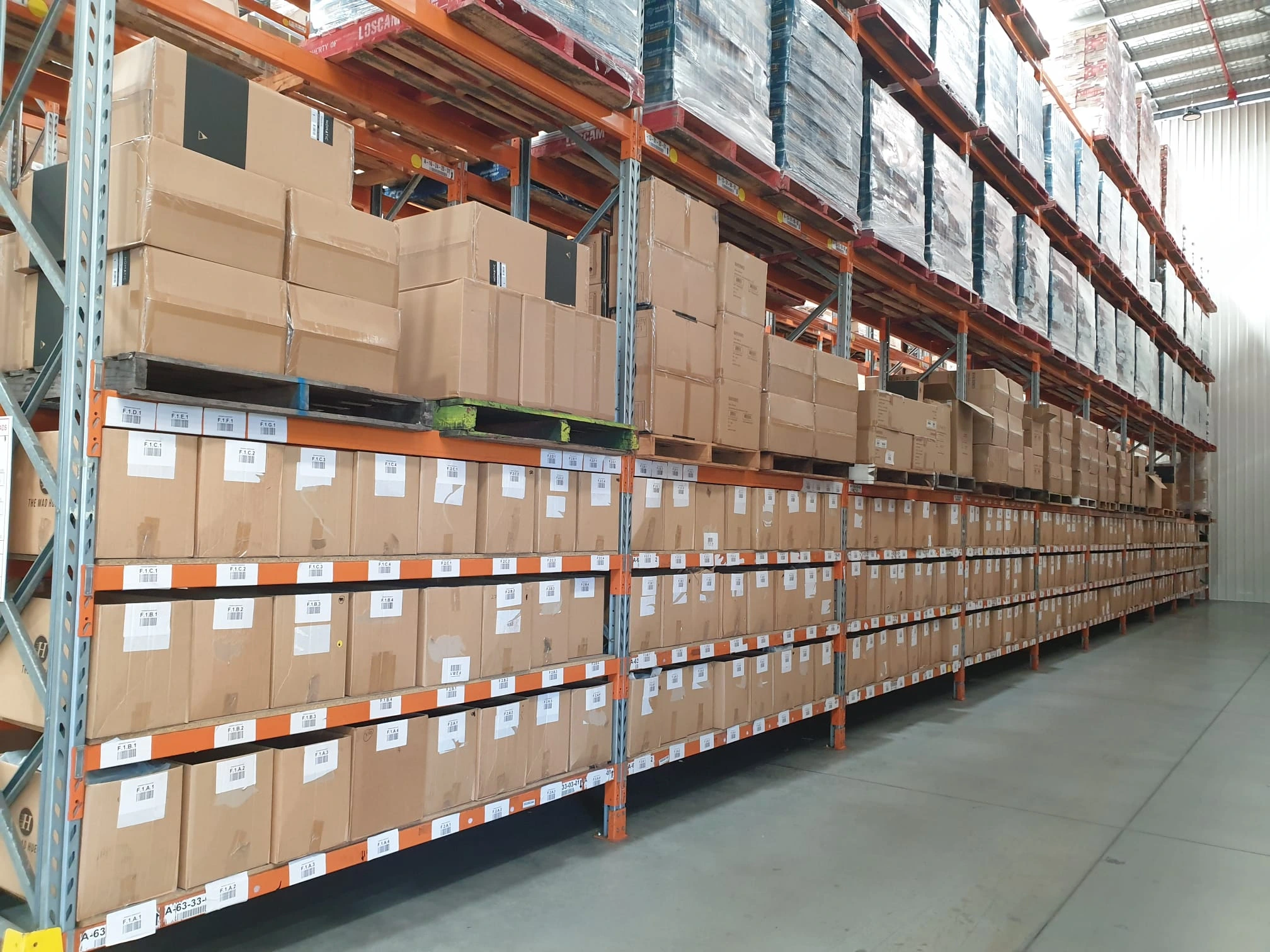
Most businesses start fulfilment in-house. A spare room, a garage, a small team packing orders at a table — it works at low volumes, and it keeps costs visible. Then orders increase. The packing table is occupied all day. Errors start appearing. The courier booking takes an hour each afternoon. And the person managing fulfilment is also the person who should be developing new products, managing suppliers, and growing the business.
The question of when to move to a pick and pack warehouse is an operational one, not a financial one. The signal is not a specific revenue number — it is whether fulfilment is consuming capacity that should be going elsewhere. Businesses facing broader storage, transport and inventory challenges may also benefit from understanding when to outsource logistics to a 3PL.
What a Pick and Pack Warehouse Does
A pick and pack warehouse receives a business’s stock, stores it through professionally managed warehousing services, and processes customer orders on the business’s behalf. When an order arrives through the ecommerce platform, the warehouse team picks the items, packs them to the business’s specifications, labels the parcel, and hands it to the carrier. The business receives a despatch confirmation and a tracking number. The customer receives their order. The process runs daily, scales with order volume, and does not require the business owner to be involved in the physical steps. If you’re comparing different outsourcing models, understanding the difference between a fulfilment centre and a 3PL warehouse can help determine which setup better suits your operation.
Six Signs the Current Approach is No Longer Working
1. Fulfilment is taking more than two hours a day
When packing, labelling, and courier booking occupy two or more hours of a working day — for the founder, for a staff member, or split across both — that time has a real opportunity cost. At that volume, working with a third-party logistics provider can allow the same orders to be processed without consuming internal staff capacity, often at a competitive per-order rate.
2. Pick errors are creating customer complaints
Wrong items, missing items, incorrect quantities — each error generates a customer service interaction, a replacement shipment, and in many cases a refund. At low volumes, errors are manageable. When they become a pattern, they are a signal that the manual process has exceeded reliable capacity.
3. The despatch cut-off is being missed regularly
Courier collections happen once a day. An order that misses the cut-off sits overnight and delivers a day late. When cut-offs are missed because packing ran long, customers experience a delay that was not visible in the stated delivery window. Over time, this affects reviews and repeat purchase rates.
4. Storage space is running out
Stock stored in unsuitable conditions — a home garage, a shared office room, or stacked in a corner — is difficult to count accurately, hard to rotate correctly, and at risk of damage. When available storage is the constraint on how much stock can be ordered, fulfilment logistics is limiting the business’s buying decisions.
5. Seasonal peaks create bottlenecks
A Christmas peak, an end-of-financial-year sale, or a promotional event can multiply daily order volume by five or ten times for a short period. An in-house operation cannot absorb that without temporary staff, overtime, or delayed despatch. A pick and pack warehouse absorbs the peak within its existing team and facility.
6. The business is expanding to new sales channels
Adding a wholesale account, a marketplace listing, or a subscription product to an existing direct-to-consumer ecommerce store means more order types from the same inventory. Managing this manually across multiple systems is where errors and allocation mistakes multiply. A pick and pack warehouse with WMS integrations handles all channels from one stock pool. This becomes particularly useful for businesses managing ecommerce, wholesale and other retail logistics solutions through shared inventory.
What to prepare before moving to a pick and pack warehouse
Outsourcing fulfilment works best when the business arrives with documented processes rather than expecting the provider to resolve underlying disorganisation. Before onboarding:
- Confirm the full SKU list with accurate dimensions and weights for each product
- Agree on packing specifications — box sizes, void fill, inserts, branding requirements and any required custom packaging solutions
- Document the returns policy so the warehouse team knows what to do when a parcel comes back
- Confirm which ecommerce platforms and carrier accounts need to connect to the warehouse management system
- Agree on the daily despatch cut-off time and any exceptions for express or same-day orders
What the right pick and pack partner looks like
The key criteria are scan-and-verify picking to reduce errors, platform integration for automatic order flow, real-time inventory visibility, a confirmed daily despatch cut-off, a documented returns process, and the ability to scale during peak periods without advance notice. Location also matters: a facility close to a major port or motorway network reduces transit time and freight cost on interstate deliveries.
Ready to Outsource Your Pick and Pack Fulfilment?
TLC Enterprise provides pick and pack services from our Truganina, VIC facility — with scan-and-verify picking, platform integrations, same-day despatch, and dedicated account management for growing businesses.
Call: 1300 343 751 | Email: bookings@tlcenterprise.com.au | View pick and pack services at TLC Enterprise
Frequently Asked Questions
Most pick and pack providers charge a per-order handling fee that covers the pick, pack, and label step, a per-unit storage fee based on pallet space or cubic metres used, a receiving fee per inbound shipment, and the actual carrier despatch cost. Some providers charge a monthly account or platform integration fee in addition. Always request a full itemised breakdown before comparing quotes.
Minimum volume requirements vary by provider. Some require a minimum number of orders per month or a minimum storage volume before they will take on an account. It is worth asking directly and modelling whether the per-order fee is lower than the combined cost of in-house staff time, packaging materials, and carrier management at the current volume.
A professional pick and pack warehouse plans for peak periods as part of its capacity management. Unlike an in-house operation that requires temporary staff and overtime at peak times, the provider absorbs volume spikes within its existing team and facility structure. Businesses should confirm with the provider how peak capacity is managed and whether advance notice of promotions or launches is required.
Yes, subject to the provider’s capabilities. Most pick and pack warehouses handle a range of product types including fragile, flat-pack, or apparel items. Products with specific handling requirements — temperature sensitivity, hazardous classification, or high value — should be discussed with the provider before onboarding to confirm appropriate procedures are in place.