
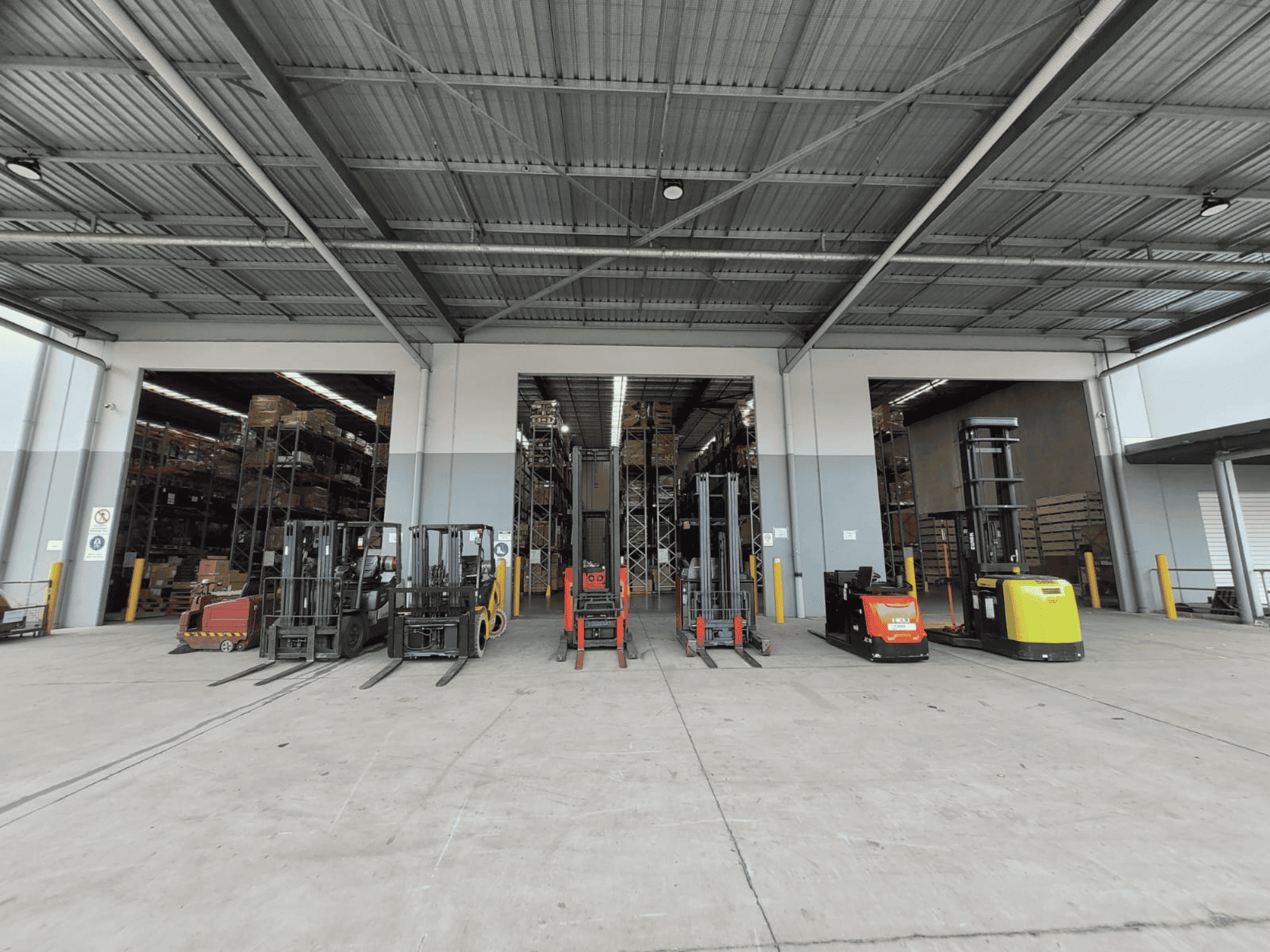
Warehouse automation covers a broad range of technologies that reduce the need for manual steps in receiving, storing, picking, packing, and despatching goods. It ranges from basic barcode scanning and warehouse management software through to robotic picking systems and autonomous mobile units.
For businesses evaluating warehousing partners, understanding where automation sits in the operation matters — it affects throughput speed, error rates, and the cost per order at scale.
What Warehouse Automation Covers
Automation in a warehouse context includes:
- Warehouse management systems (WMS): software that tracks inventory, manages pick-runs, and connects to ecommerce platforms and carrier systems
- Barcode scanning and scan-and-verify picking reduces pick errors by confirming each item before it is packed
- Automated conveyor and sorting systems: move totes or parcels between pick, pack, and despatch without manual handling
- Autonomous mobile robots (AMRs): self-navigating units that bring product locations to the picker rather than requiring pickers to walk the warehouse floor
- Automated storage and retrieval systems (AS/RS): mechanised systems that store and retrieve items from high-density racking
- Voice-directed picking: headset-based systems that guide pickers through orders without paper or screen
Not all automation requires significant capital investment. A well-implemented WMS with scan-and-verify picking can cut error rates substantially without robotics.
Benefits of Warehouse Automation
Higher Throughput
Automated systems process orders faster and more consistently than manual operations at the same staffing level. A pick-to-light or scan-and-verify system can reduce the time per order line by 20 to 40 per cent in high-SKU environments, according to industry benchmarks from Extensiv’s 2024 warehousing research.
Lower Error Rates
Scan-and-verify picking confirms the correct item and quantity before packing. This single step eliminates the majority of wrong-item picking errors that occur in manual operations without verification checks.
Better Inventory Visibility
Automation connected to a WMS updates inventory in real time with every movement. The business has an accurate stock count at any moment, reducing overstock purchases and preventing stockouts that result in missed orders.
Challenges to Consider
Automation is not a straightforward solution for all warehouse environments. Key challenges include:
- Implementation cost: robotic systems and AS/RS require significant capital investment and ongoing maintenance
- SKU complexity: highly variable product sizes or fragile items can limit which automation technologies are applicable
- Change management: staff training and process redesign take time and carry short-term productivity risk during the transition
- Technology dependency: a system failure in an automated operation can halt throughput until the issue is resolved, whereas a manual operation can continue
For most businesses outsourcing to a 3PL, the relevant question is not whether to invest in automation directly, but whether the provider’s facility uses appropriate technology for the volume and product type involved.
Where Warehouse Automation is Heading
The direction of warehouse automation in Australia follows global trends: wider deployment of AMRs in fulfilment centres, deeper WMS integration with ecommerce platforms and carrier networks, and increased use of machine learning for demand forecasting and inventory positioning. Mainfreight’s 2024 advanced warehousing technology investment and similar moves by major logistics operators point to automation becoming a baseline expectation rather than a differentiator within five years.
Want automated warehousing without the capital cost?
TLC Enterprise operates warehousing facilities across Melbourne, Sydney, Brisbane, Adelaide, Perth, Darwin, and Townsville — giving businesses access to modern warehouse technology and real-time inventory visibility without building their own facility.
Use the Free Transport Health Check-Up for a no-cost review of your current logistics setup, or contact the team at bookings@tlcenterprise.com.au or 1300 343 751.
Frequently Asked Questions
No. Current automation systems complement warehouse staff rather than replacing them entirely. Robots and conveyor systems handle repetitive, high-volume tasks. Staff handle exceptions, quality control, complex pick tasks, and operational management. The staffing model changes — fewer pickers, more technical roles — but the operation still requires people.
A warehouse management system is software that tracks inventory, manages order pick-runs, records every inbound and outbound movement, and connects to external systems such as ecommerce platforms and carrier booking tools. Not all warehouses use a WMS — some still operate on spreadsheets or paper. For ecommerce fulfilment, a WMS is a baseline requirement.
In high-volume operations, automation typically reduces the cost per order by increasing throughput per labour hour. In low-volume operations, the capital cost of automation may not be recovered within a practical timeframe. 3PL providers pass the benefit of automation to clients through competitive per-order handling rates.
Yes. Using a 3PL provider that operates an automated facility gives a business access to the technology without capital expenditure. The business pays for the service — per order, per pallet, per unit — rather than the infrastructure.