
If you’re a retailer paying for warehouse space you don’t always fill, managing staff during slow months, and still missing dispatch windows during peak season, the economics of in-house logistics probably don’t add up. Commercial warehouse rents in western Melbourne rose 18% between 2022 and 2024 (CBRE, 2024), and ABS figures show retail turnover declined 0.1% in February 2024. More cost, less revenue.
A third party logistics service provider takes over the warehousing, fulfilment, and freight so the retailer pays per order or per pallet instead of per square metre. This article covers what those services include and what to check before signing a contract.
What 3PL means for Australian Retailers
Most retailers don’t get into business to run a warehouse. A 3PL arrangement lets you hand that off. The provider takes on whichever logistics functions make sense for your operation storage, pick-and-pack, freight, customs clearance, returns while you stay focused on buying, selling, and the customer.
The retail sector is pulling a large share of that demand, mostly from online orders. Next-day delivery expectations and the pressure to get every order right the first time are making dedicated fulfilment operations the practical choice over in-house setups that were never designed for that volume or speed.
Core Retail Supply Chain Services a 3PL Provides
Warehousing and Inventory Management
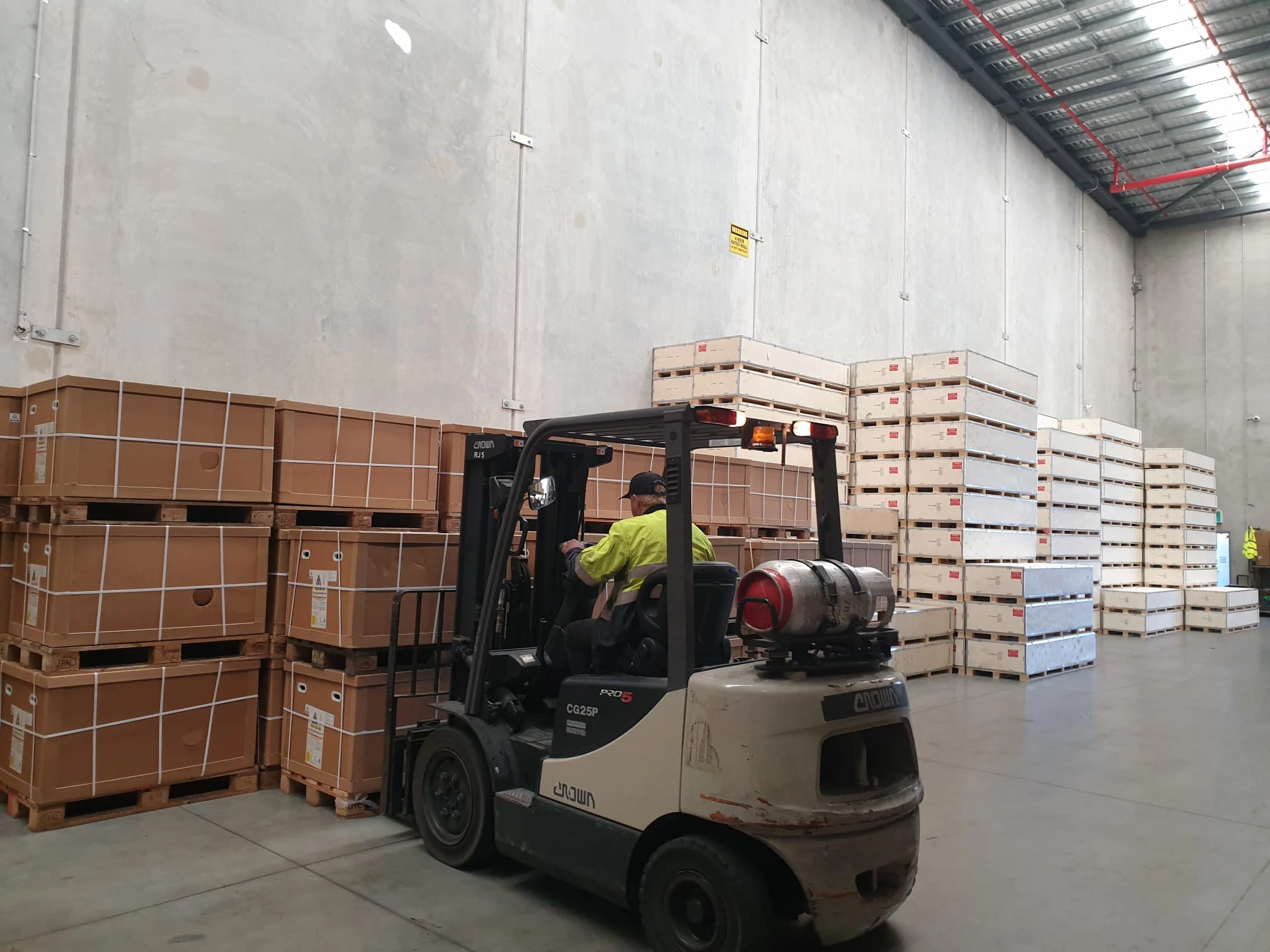
A 3PL warehouse holds your stock in a shared or dedicated facility, manages inbound receipts, and tracks inventory in real time. For a retailer selling across multiple channels physical stores, website, and marketplaces such as Amazon Australia this means one inventory pool rather than separate buffers for each channel.
TLC Enterprise operates warehousing facilities in Melbourne (Truganina), Sydney, Brisbane, Adelaide, and Perth, giving retailers a national footprint without leasing separate buildings in each state.
Order Fulfilment and E-fulfilment
E-fulfilment covers the pick, pack, and dispatch of individual online orders. Speed and accuracy are the critical metrics. Australia Post’s 2023 Inside Australian Online Shopping report found that 62% of Australian online shoppers consider delivery speed a key reason they buy from one retailer over another.
A 3PL located in a metropolitan freight hub (such as Truganina, VIC, one of Australia’s largest logistics precincts) reduces transit times to major population centres compared with a retailer operating from a suburban or regional address.
Freight Forwarding and Customs Clearance
Retailers sourcing product from Asia, Europe, or North America need customs brokerage, import documentation, and coordination between the overseas shipper and the Australian warehouse. A 3PL with freight forwarding capability handles sea freight, air freight, and coastal shipping under one contract, removing the need for a separate customs broker.
TLC Enterprise’s freight forwarding services cover air freight, and sea freight, with inbound logistics starting from the point of arrival at Australian shores.
Returns Management (Reverse Logistics)
Australian apparel retailers deal with return rates of 20 to 30% and for many, processing those returns is where operations quietly fall apart. Inspecting, restocking, and disposing of items takes time and resource that most in-house teams simply don’t have. A 3PL built for reverse logistics takes that pressure off, turning returns into restocked inventory faster while giving retailers clear visibility into why customers are sending items back.
Custom Packaging and Value-Added Services
Beyond basic storage and dispatch, retailers often need kitting (assembling multiple SKUs into one product set), repackaging for promotions, or branded packaging that meets their customer experience standards. These value-added services sit inside the same 3PL facility, avoiding an additional handling step.
Measurable Benefits for Australian Retailers
| Benefits | What it means in practice |
|---|---|
| Lower fixed costs | Pay per pallet and per pick. No lease, no forklift depreciation, no warehouse staff payroll. |
| Scalable capacity | Add or reduce storage space seasonally without renegotiating a lease. |
| National reach | Access warehouses in Melbourne, Sydney, Brisbane, Adelaide, and Perth under one account. |
| Technology access | Use the 3PL’s transport management system and real-time tracking without buying the software. |
| Compliance support | A 3PL managing medical or food products holds relevant accreditations, reducing compliance burden on the retailer. |
How to Evaluate a 3PL Provider in Australia
Before signing a contract, verify the following:
- Warehouse location relative to your customer base: A facility in western Melbourne or western Sydney sits within 30 km of both port and major motorway networks.
- Technology integration: Confirm the 3PL’s warehouse management system (WMS) connects directly to your e-commerce platform (Shopify, Magento, etc.) via API or EDI.
- Minimum volume commitments: Some 3PLs require a monthly minimum number of orders or pallets. Verify this matches your current volume, not your forecast.
- Industry experience:
A 3PL handling fresh food operates differently from one focused on bulk building materials. Confirm they handle your product category. - Key performance indicators in the contract: Insist on written SLAs covering pick accuracy (target: 99.5%+), order dispatch cut-off times, and stock discrepancy rates.
- Insurance cover: Confirm the 3PL holds appropriate goods-in-transit and warehouse liability insurance, and what limits apply per incident.
TLC Enterprise’s Retail Logistics Services
TLC Enterprise provides transport management, warehousing, supply chain management, freight forwarding, and custom packaging under one account structure. Retail clients across consumer goods, FMCG, and e-commerce categories use TLC’s dedicated account management team and real-time tracking systems.
Relevant services for retailers include:
- Consumer and retail logistics with multi-client warehouse facilities
- E-fulfilment, covering pick, pack, and dispatch for online orders
- Custom packaging and kitting for promotional or bundled products
- Freight forwarding covering air, sea, coastal, and New Zealand exports
- Reverse logistics for returns processing and restocking
- Supply chain IT integration through a dedicated platform
To assess whether TLC Enterprise is a fit for your retail logistics, contact the team at bookings@tlcenterprise.com.au or 1300 343 751.
Need a Tech-Ready 3PL Partner?
TLC Enterprise uses the latest logistics technology to help your business run smarter. Contact us today to discuss your needs.
FAQ's
In-house logistics means the retailer leases the warehouse, employs the staff, and manages all transport directly. 3PL means outsourcing those functions to a specialist provider. The key trade-off: in-house gives full control; 3PL converts fixed costs to variable costs and provides immediate access to an established network without capital outlay.
Most Australian 3PLs connect to Shopify, WooCommerce, Magento, and major marketplaces via API or EDI. When a customer places an order, the data flows automatically to the 3PL’s WMS, which triggers picking and dispatch. Confirm which platforms a 3PL supports before signing and ask for a test integration during onboarding.
There is no universal threshold. The calculation depends on your current warehouse cost per order versus the 3PL’s per-order fee. As a rough guide, retailers processing more than 200 to 300 orders per month typically find that outsourcing reduces per-order cost once warehouse rent, staff, and packing materials are factored in. Ask any 3PL provider for a cost-per-order comparison based on your actual volumes.
A well-structured 3PL agreement includes provisions for volume spikes, such as Black Friday or Christmas trading. This is typically handled through flexible storage pricing and temporary labour arrangements within the 3PL’s facility. Confirm peak-season SLAs, including the cut-off time for same-day dispatch and any surcharges that apply above a baseline volume.
Yes. Reverse logistics is a standard 3PL service. The provider receives returned items, inspects them against your criteria, restocks sellable units, and disposes of or quarantines damaged goods. Confirm that the 3PL provides return reporting that captures return reasons, which feeds into product quality and purchasing decisions.
Many businesses see cost control and delivery performance improvements within the first few months of implementing better systems and workflows. However, optimisation is ongoing; regular reviews are essential for long-term results.