
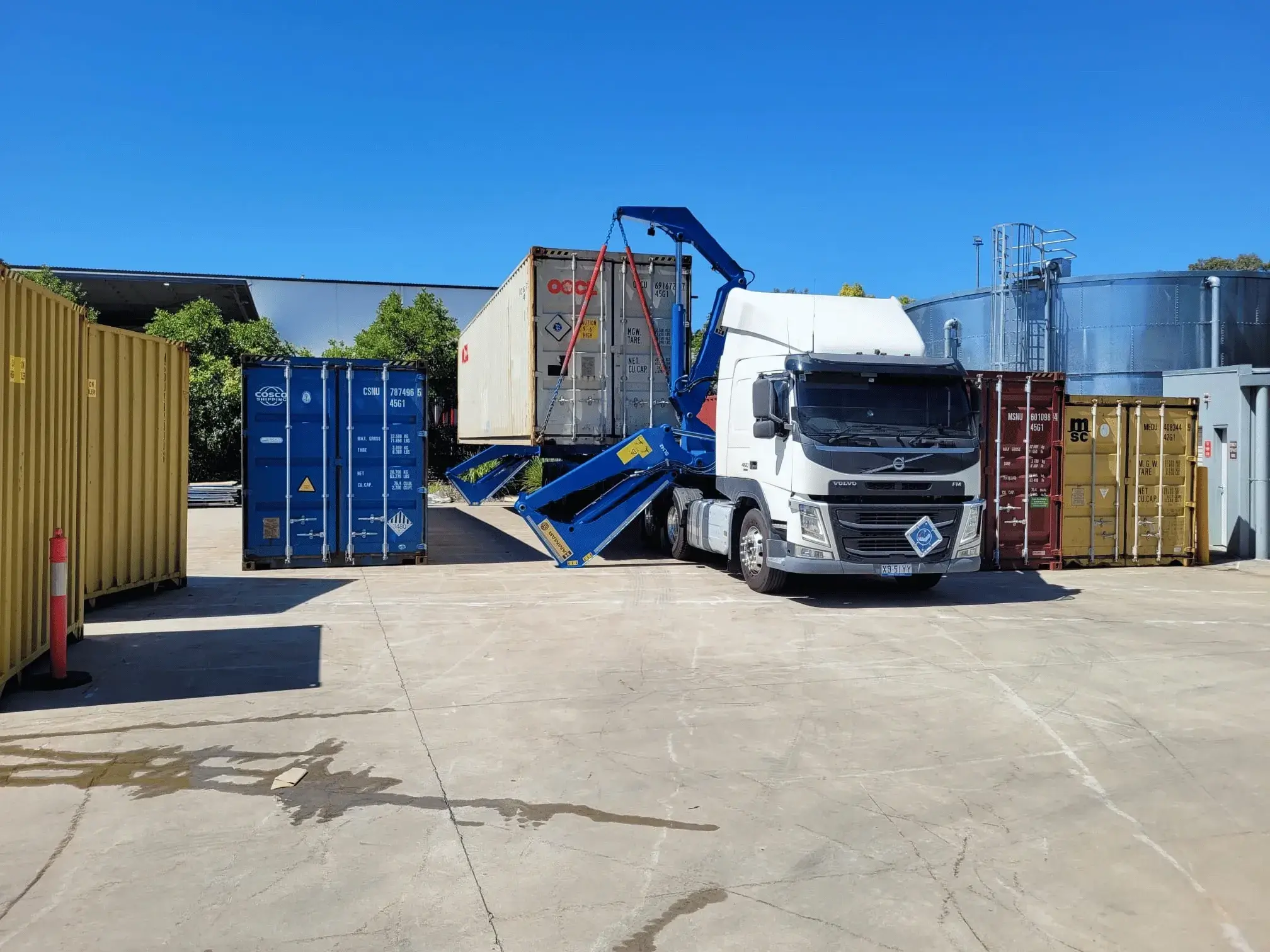
A 3PL company manages outsourced logistics tasks on behalf of another business. This usually includes receiving stock, storing inventory, picking and packing orders, organising freight, tracking deliveries, handling returns, and reporting on logistics performance. The exact scope depends on the contract and the services included.
Running logistics in-house works at the start. But as order volumes increase, storage space fills up, delivery errors climb, and the team that was packing orders part-time is doing it full-time and still falling behind. At some point, most growing businesses reach a stage where managing the warehouse, coordinating freight, and processing returns takes up more time than the core business itself.
That is when a third-party logistics provider, or 3PL, enters the picture. A third party logistics company takes over the physical handling of goods: receiving stock, storing it, fulfilling orders, coordinating freight, and managing returns. The business keeps ownership of the goods and the customer relationship. The 3PL handles everything in between.
This guide covers what 3PL companies actually do, step by step, with practical examples across retail, FMCG, construction, medical supply, and mining. If you are assessing whether outsourced logistics is right for your business, see TLC Enterprise’s guide on how to choose the right 3PL provider as a follow-up resource.
What does a 3PL Company do?
A 3PL company manages the physical logistics operations that a business would otherwise run internally. The core work covers eight areas: receiving goods from suppliers, inspecting and recording inventory, storing products in a warehouse, tracking stock levels, picking and packing orders, coordinating freight and delivery, handling returns, and providing performance reports.
Most 3PL providers handle some combination of these functions. Which ones depend on the contract. A business might outsource only warehousing and fulfilment, keeping transport management in-house. Another might hand over the full supply chain, from port arrival to final delivery.
The 3PL Process: Step by Step
1. Receive stock
The 3PL provider accepts inbound goods from suppliers, manufacturers, or import shipments. For an Australian importer using Port of Melbourne, this means the 3PL collects the container from the port, brings it to the warehouse, and books in the delivery. The receiving process creates the first record in the inventory system.
2. Inspect and record inventory
Warehouse staff count and check items against the purchase order. Any discrepancy, damaged unit, or missing item is documented at this stage rather than discovered later during a pick. Stock is entered into the warehouse management system and assigned a bin or racking location.
Example: A Melbourne-based FMCG importer receives a 20-foot container from Asia. The 3PL unpacks the container, counts units by SKU, flags five damaged cartons, photographs them for the supplier claim, and updates the WMS with accurate available stock before the client’s sales team can view the inventory.
3. Store products safely
The 3PL allocates storage zones based on the product’s requirements. Bulk pallets of building materials sit in high-bay racking. Medical supplies go into secured, access-controlled zones. Fast-moving e-commerce stock stays in pick-friendly shelving near the despatch area. A well-organised warehouse reduces pick errors and handling time.
4. Track stock levels
Inventory tracking is one of the most practical reasons businesses move to a 3PL. Instead of spreadsheets or a separate system, the WMS updates in real time as stock moves. Low-stock alerts can trigger reorder notifications automatically. Clients access the same inventory view as the warehouse team, from any device.
5. Pick and pack orders
When an order comes in, whether from a Shopify store, a wholesale customer portal, or a retail DC system, the WMS generates a pick list. Staff pick the specified items, verify quantities, and pack them according to the client’s requirements. This may include branded boxes, tissue paper, inserts, or custom labels.
Pick accuracy is measured as a percentage of orders fulfilled without error. A well-run 3PL warehouse targets 99.5% or above. At 500 orders per day, even a 1% error rate means five wrong deliveries daily, five customer service issues, and five return shipments.
6. Dispatch and coordinate freight
Packed orders are handed to the selected carrier. The 3PL manages relationships with couriers and interstate transport companies, along with booking systems and rate cards, so the client does not need a direct account with every carrier. Interstate FTL shipments, LTL consolidation loads, metropolitan courier runs, and international air or sea freight all move through the same 3PL account.
For businesses in Melbourne, for example, a 3PL based in Truganina has direct freeway access to Port of Melbourne and major motorway networks, which reduces transit times for both inbound port freight and outbound metro deliveries.
7. Track delivery and handle exceptions
The 3PL monitors delivery progress through carrier tracking systems. When a delivery fails, an address is incorrect, or a shipment is delayed, the account manager acts without waiting for the client to contact the carrier. This matters most for time-sensitive deliveries, such as medical supplies or construction site materials tied to a project schedule.
8. Process returns and provide reports
Returned goods come back to the 3PL warehouse. Staff inspect the condition, update the WMS, and either restock sellable units or separate damaged stock for the client’s assessment. According to Shippit’s 2023 State of Shipping Report, return rates in Australian online apparel retail run at 20 to 30%. Managing this volume requires a documented process, not ad hoc handling.
Regular reports cover on-time dispatch rates, order accuracy, inventory discrepancies, carrier performance, and returns data. These reports give the client visibility without requiring them to work inside the warehouse system day to day.
Main Services 3PL Companies Usually Handle
Warehousing and storage
Secure, scalable storage without the business needing its own lease. Multi-client 3PL facilities allow a business to pay per pallet, scaling space up during peak season and down when demand drops. See TLC Enterprise’s warehousing services for a detailed overview.
Inventory management
Live stock counts, cycle checks, WMS updates, and real-time visibility. A good inventory management system eliminates the lag between physical stock movements and what the business can see in its system.
Pick, pack, and fulfilment
Order preparation for e-commerce, retail, wholesale, or B2B customers. This is where most growing businesses find the biggest operational relief — the 3PL team handles the volume so internal staff do not.
Freight and transport coordination
Metro deliveries, interstate FTL and LTL runs, and carrier coordination. A 3PL with an established carrier network negotiates rates and manages booking across multiple carriers, giving the client options without requiring separate accounts.
Returns and reverse logistics
Receiving returned goods, checking condition, restocking serviceable units, and updating inventory records. Without a documented returns process, returned stock accumulates in a corner, the WMS shows incorrect available stock, and the client has no data on why goods are coming back.
Value-added services
Kitting, re-labelling, custom packaging, rework, palletising, and cross-docking. These services happen inside the 3PL facility, removing an additional handling step between production and despatch. Businesses that need branded inserts, product bundles, or protective presentation can use custom packaging solutions as part of the wider 3PL service, reducing extra handling between production, storage, and despatch.
What a 3PL Company Does Not Usually Do
Understanding the limits of a 3PL arrangement avoids common misunderstandings before a contract is signed.
- A 3PL does not own the client’s stock. Ownership stays with the client at all times. The 3PL is responsible for handling and storage, not the goods themselves.
- A 3PL does not manufacture products or create demand. It manages what the client supplies, not the production or sales process.
- A 3PL does not replace the client’s full business team. Account managers handle logistics, not marketing, customer service, or financial management.
- A 3PL may not handle international customs unless freight forwarding services and customs brokerage are explicitly included in the contract. Confirm this before assuming inbound import logistics are covered.
- A 3PL is not a courier. A courier picks up and delivers individual parcels. A 3PL manages the warehouse, the inventory, and the coordination of freight often using couriers as one part of the delivery network.
When do Growing Businesses Start Using a 3PL?
There is no fixed order volume or revenue threshold that makes a 3PL the right move. But several common operational signals indicate that in-house logistics has reached its practical limit:
- Orders are increasing and in-house packing is creating a bottleneck — same-day despatch is being missed regularly.
- Warehouse or storage space is too expensive, too small, or poorly located relative to customers or the port.
- Delivery errors, damaged goods, or customer complaints about wrong or late orders are increasing.
- The business is expanding into new cities or interstate markets, and managing freight from a single location is becoming unworkable.
- Seasonal demand creates short-term peaks that are difficult to staff for internally without committing to permanent headcount.
- The business imports goods and the inbound process, port drayage, customs, and delivery to warehouse, is uncoordinated.
If any of these apply, the next step is evaluating providers. TLC Enterprise’s guide on how to choose the right 3PL provider covers evaluation criteria, pricing transparency, and what to check in a service agreement.
How Different Businesses Use a 3PL in Australia
Australia’s size and industry diversity mean 3PL requirements vary significantly by sector. Here is how the service applies across different business types.
| Business | Situation | How a 3PL Helps |
|---|---|---|
| E-commerce | Orders come in at all hours. Peak season creates volume spikes. Returns are frequent. | The 3PL picks, packs, and dispatches individual orders daily. WMS connects to the online store so orders flow automatically. Returns are processed back into available stock. |
| Retail & FMCG | Retail DCs require pallet deliveries on fixed windows. Stock replenishment must match sell-through rates. | FTL and LTL transport on scheduled runs. Predictive inventory tools flag reorder points before stock runs out. |
| Construction & Building Materials | Materials are bulky, heavy, and need to reach specific sites within project schedules. | Staged deliveries coordinate with the site programme. Cross-dock moves materials directly to site without long-term storage. |
| Medical Supply | Sensitive products need documented handling, chain-of-custody records, and reliable delivery windows. | Secure storage with controlled access. Documented receipting and despatch process. Account manager monitors critical deliveries. |
| Mining & Industrial | Equipment and consumables move to remote sites, often hundreds of kilometres from the nearest warehouse. | National 3PL network covers remote NT and North Queensland via Darwin and Townsville. Inbound logistics from port to site managed end to end. |
How 3PL Supports Business Growth
Outsourcing logistics to a 3PL provider does more than reduce the day-to-day workload. It changes the cost structure and operational capability of the business in ways that support growth.
- Lower fixed overheads. Warehouse lease, forklift depreciation, pallet racking, WMS licences, and logistics staff payroll shift from fixed costs to variable per-pallet and per-order fees. According to Extensiv’s 2024 shipper research, 75% of businesses using 3PLs reported reduced overall logistics costs.
- Better operational consistency. Trained warehouse teams with documented pick-and-pack processes reduce error rates compared with a team that packs orders between other responsibilities.
- Greater delivery visibility. WMS and TMS data gives clients, operations managers, and customers access to real-time tracking and reporting without a separate investment in technology.
- More flexibility during peak periods. A 3PL absorbs volume spikes, such as Black Friday or Christmas, using its existing facility and workforce. The client does not hire temporary staff or lease short-term storage.
- National reach without multiple contracts. A 3PL with locations in multiple cities, such as Melbourne, Sydney, Brisbane, Adelaide, Perth, Darwin, and Townsville, gives a business national distribution under one account.
What to Prepare Before Speaking With a 3PL Provider
A first conversation with a 3PL goes faster and produces a more accurate quote when these details are ready:
- Average monthly order volume, or average pallet movements per month for wholesale or B2B businesses.
- Product dimensions, weights, and any special handling requirements — temperature control, hazardous goods classification, or fragile handling.
- Delivery locations and customer types — metropolitan retail, regional distribution centres, interstate B2B customers, or direct-to-consumer households.
- Current pain points: late despatch, stock discrepancies, damage in transit, high return rates, or lack of tracking visibility.
- Required integrations — which e-commerce platform, ERP, or ordering system the 3PL’s WMS needs to connect to.
- Expected service levels — same-day despatch cut-off times, SLA requirements for retail DC deliveries, and any seasonal volume peaks.
Taking the Next Step
A 3PL company manages the operational side of logistics so a growing business can concentrate on sales, service, and product development. The scope varies, but the practical value is consistent: fewer internal resources spent on warehouse operations, better stock visibility, and more reliable delivery performance.
The right 3PL relationship depends on clear scope, technology that connects to existing systems, and a provider with genuine coverage across the locations the business needs.
Need practical 3PL support in Australia?
TLC Enterprise provides warehousing, freight, fulfilment, and supply chain coordination for businesses across Melbourne, Sydney, Brisbane, Adelaide, Perth, Darwin, and Townsville.
Use the Free Transport Health Check-Up for a no-cost review of your current logistics setup, or contact the team at bookings@tlcenterprise.com.au or 1300 343 751.
Frequently Asked Questions
A 3PL company manages outsourced logistics tasks for another business. This includes receiving stock from suppliers, storing inventory in a warehouse, picking and packing orders, coordinating freight and delivery, tracking shipments, processing returns, and providing performance reports. The exact scope is defined in the service agreement.
No. A warehouse stores goods. A 3PL combines storage with fulfilment, freight coordination, inventory tracking, returns processing, and reporting. Some 3PLs also offer value-added services such as kitting, custom packaging, and cross-docking. A warehouse that only stores goods is one part of what a full 3PL provides.
No. The client owns the goods at all times. The 3PL is responsible for managing the handling, storage, and movement of those goods according to the agreed contract. The 3PL is not a buyer or reseller of the client’s stock.
Yes. Most 3PL providers manage warehousing and freight coordination under one contract. This means inbound goods are received into the warehouse, stored, picked and packed, and then despatched via the carrier network the 3PL manages. The client interacts with one provider rather than separate warehouse and transport companies.
Yes. Growing businesses use a 3PL when order volume, storage requirements, or delivery complexity exceeds what can be managed internally without significant capital investment. A multi-client 3PL facility allows smaller businesses to access professional warehousing and fulfilment on a pay-per-use basis, without leasing their own warehouse.
Have these details ready: average monthly order or pallet volumes, product dimensions and weights, delivery locations and customer types, current logistics pain points, required system integrations, and expected service levels including despatch cut-off times and any seasonal peaks. The more specific the information, the more accurate the initial quote and service proposal will be.