
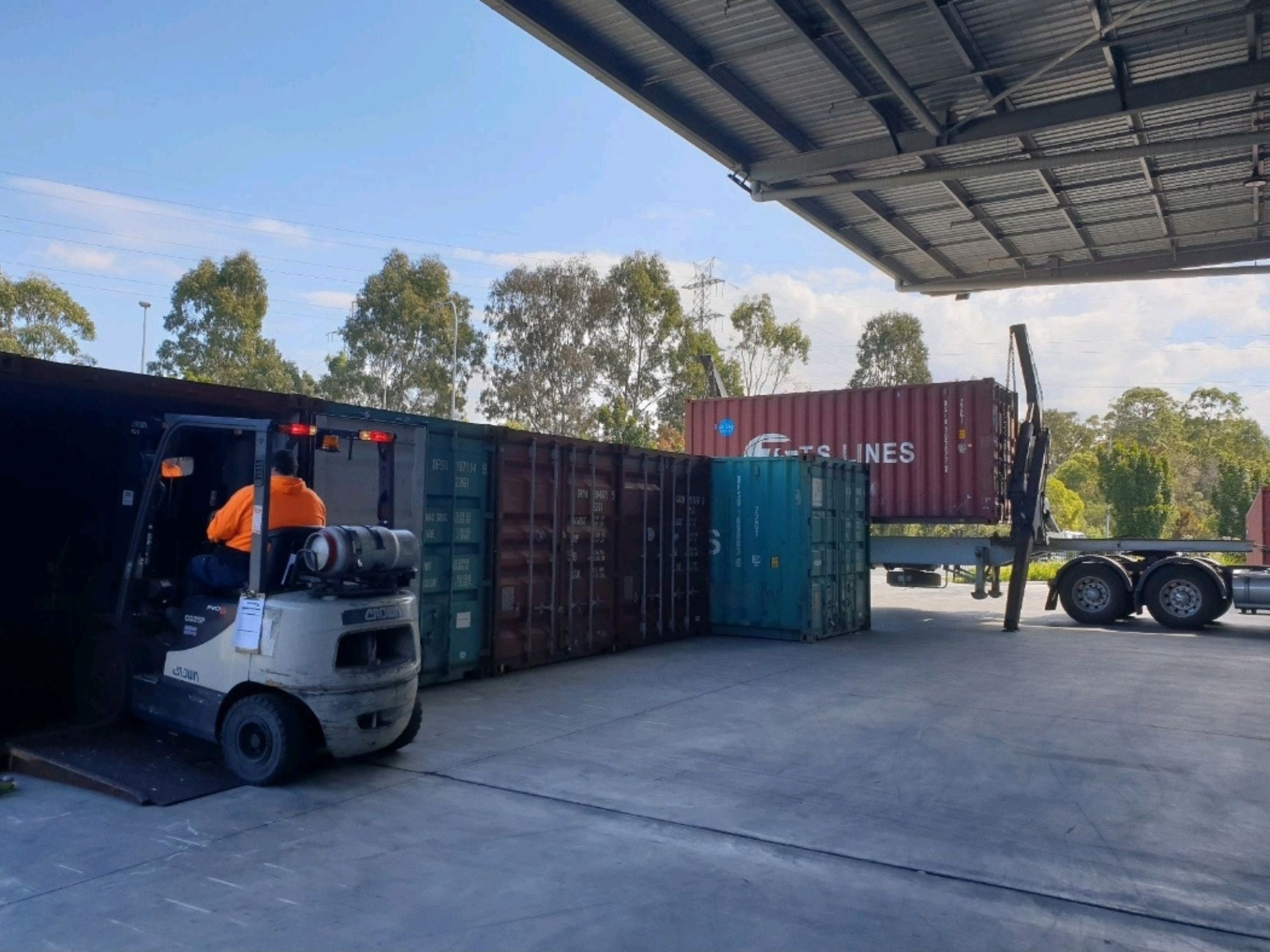
Most businesses reach a point where internal logistics stops keeping pace with growth. Orders increase, the warehouse fills up, delivery coordination becomes a daily problem, and the freight bill keeps climbing without anyone having a clear picture of what it includes or why. At this stage, businesses often need to decide whether better transport management solutions can solve the pressure or whether warehousing and fulfilment also need to be outsourced.
The response is almost always some form of outsourcing. But outsourcing logistics is not a single decision. There are different models — 2PL, 3PL, and 4PL — that describe different levels of involvement, and choosing the wrong one creates its own set of problems. A business that hires a carrier when it actually needs a full warehouse operation will still be managing stock chaos internally. A business that contracts a lead logistics provider before it has a complex enough network is paying for coordination it does not need.
This article explains what each model means, how they differ, and which one fits different business situations. The goal is a clear decision, not a jargon-heavy comparison.
What Do 2PL, 3PL and 4PL Mean?
2PL (Second-Party Logistics): An external provider handles one logistics function, usually transport or basic storage. The business keeps control of its warehouse and inventory.
3PL (Third-Party Logistics): A provider takes over operational logistics — warehousing, inventory management, pick and pack, freight coordination, returns, and reporting. The business keeps strategic ownership of the product and customer relationship.
4PL (Fourth-Party Logistics / Lead Logistics Provider): A provider manages the wider supply chain services accross the network — coordinating multiple 3PLs, carriers, systems, and performance data. The 4PL usually does not physically handle goods.
2PL vs 3PL vs 4PL: Quick Comparison
| Factor | 2PL | 3PL | 4PL |
|---|---|---|---|
| Main role | Moves goods or handles one logistics function | Manages day-to-day logistics operations | Coordinates and optimises the wider supply chain network |
| Typical services | Transport, freight routes, carrier capacity and basic storage | Warehousing, inventory, pick-pack, dispatch, freight, returns and reporting | Vendor management, network design, provider coordination, analytics and governance |
| Who handles goods? | Carrier or asset-based provider | Usually the 3PL team or warehouse network | Usually not the 4PL; 3PL providers and carriers handle the goods |
| Best for | Businesses that need transport support only | Businesses needing outsourced warehousing, fulfilment and freight coordination | Large or complex businesses managing multiple logistics providers |
| Control level | High — the business controls its warehouse and inventory | The business keeps strategic control while operations are outsourced | The business gives broader coordination control to the 4PL provider |
| Cost model | Per shipment, load, route or contract | Storage, handling, pick-pack, freight and service fees | Management fee plus logistics provider costs |
| Risk if chosen too early | Does not solve warehouse or fulfilment pressure | May exceed requirements when transport is the only need | Adds cost and complexity when the provider network is not mature enough |
2PL — Second-Party Logistics
What is 2PL?
Second-party logistics means the business uses an external carrier or transport provider to move its goods. The transport relationship is direct: the carrier owns the trucks, planes, ships, or rail capacity and provides freight services under a commercial agreement.
Under a 2PL arrangement, the business typically:
- Manages its own inventory, warehouse, and stock control
- Packs and prepares orders internally
- Books the 2PL carrier for collection and delivery
- Tracks shipments through the carrier’s platform
Common 2PL examples include an interstate road carrier delivering pallets between DCs, an air freight company moving urgent stock between cities, or a shipping line carrying imported containers from a foreign port to Australia.
A 2PL model works well when the business already has its warehouse, its fulfilment process, and its inventory under control — and just needs reliable transport capacity. It does not solve stock management, pick accuracy, or returns handling. If those are the problems, the 2PL model is the wrong answer.
3PL — Third-Party Logistics
What Does a 3PL Do?
Third-party logistics takes the operational layer of logistics off the business’s plate. Instead of managing a warehouse, a fulfilment team, and carrier relationships separately, the business hands these functions to a 3PL provider that runs them as a service.
A 3PL typically manages:
- Receiving inbound goods from suppliers or import shipments
- Storing stock in appropriate warehouse locations with real-time WMS tracking
- Managing inventory counts, low-stock alerts, and movement history
- Picking and packing individual or bulk orders accurately
- Coordinating despatch and freight, including both courier and road freight
- Processing returns and providing restocking or disposal reports
- Generating performance reports covering order accuracy, despatch timing, and stock levels
- Value-added services: kitting, custom packaging, re-labelling, and cross-docking
The key difference from 2PL is that the 3PL manages the warehouse operation, not just the transport. According to IMARC Group’s 2024 Australia Third-Party Logistics Market report, the Australian 3PL sector was valued at USD 24.03 billion in 2024 and is projected to grow to USD 44.32 billion by 2033, driven primarily by e-commerce growth and demand for integrated logistics services.
For businesses evaluating 3PL providers, TLC Enterprise’s 3PL services in Australia cover warehousing, transport, freight forwarding services, and supply chain coordination.
4PL — Fourth-Party Logistics / Lead Logistics Provider
What Does a 4PL or Lead Logistics Provider Do?
A 4PL — often called a lead logistics provider — sits above the operational layer. Rather than running a warehouse or moving goods directly, a 4PL designs, manages, and optimises the network of providers that does.
A 4PL typically manages:
- Selecting, contracting, and managing multiple 3PLs and carriers on the client’s behalf
- Designing the supply chain network: which warehouses, routes, and carriers serve which markets
- Integrating data across systems using supply chain information technology to provide a single dashboard view of inventory, orders, and delivery performance
- Setting and monitoring KPIs across all logistics providers
- Making strategic recommendations on network changes, cost reduction, and service improvement
- Managing exceptions, disruptions, and provider performance issues centrally
The distinction that matters: a 4PL generally does not physically touch the goods. It manages the providers who do. As C.H. Robinson describes it in their 3PL vs 4PL guide (2024), the difference is between execution and orchestration. A 3PL executes logistics operations; a 4PL orchestrates the wider network.
A 4PL arrangement makes sense for businesses operating across multiple countries, managing several warehouse locations, and using more than one logistics provider simultaneously. For most Australian small and mid-market businesses, a well-structured 3PL provides everything they need — and a 4PL adds management overhead without a corresponding benefit.
Key Differences Between 2PL, 3PL and 4PL
Scope and responsibility
2PL is transactional: it covers a specific movement or route. 3PL is operational: it takes over the day-to-day running of logistics. 4PL is strategic: it manages the logistics network rather than any single operation within it.
Asset ownership
2PL providers own assets: trucks, vessels, aircraft, or warehouse space that they use to carry or store the client’s goods. 3PLs may own warehouse facilities and transport assets, or they may use contracted carrier networks. 4PLs are usually asset-light — their value is in management, technology, and network expertise, not in physical infrastructure.
Control the client keeps
Under a 2PL model, the client keeps full control of its inventory, warehouse, and fulfilment. Under 3PL, the client keeps strategic decisions — what to sell, how to package it, what service levels to promise — while the 3PL handles operations. Under 4PL, the client gives up significant control over which providers are used and how the network is structured, in exchange for higher-level visibility and coordination.
Cost and complexity
2PL costs are relatively straightforward: freight is priced per shipment, load, or route. 3PL costs cover storage, handling, pick-pack, and freight, and vary by volume. 4PL costs typically include a management or consultancy fee on top of the underlying 3PL and carrier costs. For that reason, a 4PL model is rarely economical unless the logistics network is complex enough to justify the coordination investment.
Which Logistics Model is Right for Your Business?
The right model depends on what the actual logistics problem is, not on which model sounds more sophisticated.
Choose 2PL if:
- You manage your own warehouse and inventory and just need a reliable carrier or freight partner
- Your orders are processed internally and the only outsourced task is the physical movement of goods
- You need transport capacity: road freight, air freight, sea freight, or a mix
- Your logistics problem is delivery speed, reliability, or freight cost — not warehouse operations
Choose 3PL if:
- You need to outsource warehousing service, order fulfilment, and freight under one provider
- Inventory management, pick accuracy, or despatch reliability is creating problems in-house
- You are expanding channels — wholesale, retail, and online — and need one warehouse to serve all of them
- Seasonal peaks create staffing and storage problems that a fixed internal operation cannot absorb
- You need interstate or national distribution without managing multiple separate carrier accounts
- You want a dedicated account manager, real-time stock visibility, and regular reporting without building that infrastructure internally
Consider 4PL if:
- The business already uses multiple 3PLs and carriers and needs central oversight of their performance
- The supply chain spans multiple countries, warehouses, and transport modes
- No single provider has visibility across the full logistics network and that gap is creating inefficiencies
- The logistics spend is significant enough to justify a management layer dedicated to optimising the network
If you have decided that a 3PL is the right model and want to evaluate providers, TLC Enterprise’s guide on how to choose the right 3PL logistics company covers the evaluation criteria, pricing transparency, and what to check before signing a contract.
Can Businesses Use 2PL, 3PL and 4PL Together?
Yes, and in practice many businesses already do.
A 3PL provider typically works with several 2PL carriers to handle different freight types — metropolitan courier runs, interstate road freight, sea freight, and air freight — rather than owning all transport assets internally. The client has one contract with the 3PL, and the 3PL manages the carrier relationships. The client benefits from the 3PL’s carrier network without managing each carrier account separately.
As businesses grow and their logistics networks become more complex, some add a 4PL layer to coordinate several 3PLs across different regions or product categories. In this structure, the 4PL does not replace the 3PLs — it manages the performance and integration across all of them.
The practical takeaway: models are not mutually exclusive. A 3PL already manages a 2PL carrier network internally. A 4PL manages the 3PLs and 2PLs as a whole. The question for most businesses is simply: at which level should the outsourcing start?
Common Mistakes When Choosing a Logistics Model
Choosing 2PL when the real problem is warehousing. Hiring a carrier does not solve stock disorganisation, pick errors, or returns handling. If the warehouse is the problem, the answer is a 3PL, not a faster truck.
Choosing 4PL too early. A 4PL adds value when there is a complex multi-provider network to manage. A business with one warehouse and two carrier accounts does not need a lead logistics provider. The management cost outweighs the benefit.
Ignoring system integration. A 3PL that cannot connect to the business’s e-commerce platform or ERP creates a manual data gap that erodes the efficiency gain from outsourcing. Check integration capability before any contract.
Not confirming industry-specific requirements. Medical supply, food, hazardous goods, and temperature-sensitive cargo each require specific handling, storage, and documentation. A general carrier or warehouse may not hold the required accreditations.
Choosing on price alone. The cheapest 3PL or carrier is not automatically the best fit. A provider that cannot maintain order accuracy, meet despatch cut-offs, or communicate reliably creates costs elsewhere — in customer service, re-deliveries, and returns.
Assuming 4PL is a better version of 3PL. They are different models, not different tiers of the same service. A strong 3PL relationship that covers the full operational need is often more valuable than a 4PL layer on top of an under-resourced 3PL.
Australian Business Examples
| Business type | Logistics situation | Model that fits | Why |
|---|---|---|---|
| Online retailer | Growing e-commerce store. Packing orders in-house is taking most of the day. Storage is running out. | 3PL | Needs warehouse, pick-pack, and courier coordination — not just transport. |
| Wholesale food brand | Supplies supermarket DCs and runs a direct-to-consumer subscription. Uses its own small warehouse. | 3PL | Multi-channel fulfilment from one warehouse with inventory split across retail and online orders. |
| Construction supplier | Imports materials via Port of Melbourne. Needs them moved to project sites across Victoria. | 2PL initially, then 3PL as volume grows | If site delivery is the issue, a freight carrier handles it. If inbound logistics and storage are also issues, a 3PL makes more sense. |
| Medical equipment importer | Imports high-value devices. Needs compliant storage, documented handling, and reliable delivery. | 3PL with relevant accreditation | Medical supply logistics requires specific storage conditions and chain-of-custody documentation — a general 2PL carrier does not cover this. |
| National FMCG manufacturer | Runs three warehouse locations across Melbourne, Brisbane, and Perth. Uses four different carriers. Performance data is fragmented. | 4PL | Complex multi-site, multi-carrier network that benefits from central coordination and performance reporting. |
The Decision Comes Down to the Problem, Not the Model Name
2PL moves goods. 3PL manages the operational logistics. 4PL manages the network of providers doing the work.
Most Australian growing businesses operate somewhere between 2PL and 3PL: they have outgrown a carrier-only arrangement and need a partner that handles the warehouse, the stock, and the freight together. The 4PL model is relevant for businesses with genuinely complex, multi-provider networks — and for most, that stage comes later.
The right starting point is not the model name. It is an honest review of where logistics is failing the business right now: is it a transport problem, a warehouse problem, or a network coordination problem? The answer points directly to which model fits.
Need Help Identifying the Right Logistics Setup?
TLC Enterprise provides integrated transport, warehousing, e-commerce fulfilment, freight forwarding, and supply chain coordination across Australia. Whether the business needs a reliable freight partner, a full 3PL warehouse operation, or help structuring a multi-location logistics setup, the TLC team can help assess the right model.
Call: 1300 343 751 | Email: bookings@tlcenterprise.com.au
Frequently Asked Questions
2PL usually handles a specific logistics function such as transport or basic storage. 3PL manages day-to-day logistics operations: warehousing, fulfilment, inventory, and freight coordination. 4PL manages the wider supply chain network and coordinates multiple logistics providers. Each model represents a different level of outsourcing and a different allocation of control.
No. 4PL is not a better version of 3PL. It is a different model for a different type of business situation. A 4PL adds value when a business manages multiple 3PLs, carriers, and locations and needs central coordination and visibility across all of them. Many growing businesses get better value from a well-structured 3PL partner that covers the full operational requirement.
A 2PL model suits a business that already controls its own inventory, warehouse, and order handling but needs an external carrier or transport provider to move goods. It works well when transport is the specific gap, not warehouse operations or fulfilment.
A business should consider moving to 3PL when transport is no longer the only logistics issue and the team also needs help with storage, inventory tracking, pick-pack accuracy, despatch reliability, or freight coordination across multiple channels. The trigger is usually when in-house warehouse operations start consuming too much time or producing too many errors.
A lead logistics provider is a term commonly associated with the 4PL model. It describes a provider that coordinates multiple logistics partners, systems, and processes on behalf of a client business to improve network visibility, provider performance, and supply chain efficiency. The lead logistics provider usually does not physically handle goods itself.
Yes. Many companies use a 3PL for warehousing and fulfilment while that 3PL works with multiple 2PL carriers for road, air, rail, or sea transport. The client manages one 3PL relationship; the 3PL manages the carrier network. This is a common and practical arrangement for businesses distributing nationally from one warehouse.
Usually not. A 4PL is often asset-light and focuses on managing providers, data, technology, and performance rather than physically storing or moving goods. The 4PL coordinates the 3PLs and carriers that own the physical infrastructure. This is what distinguishes the 4PL from a 3PL — it manages the network rather than operating within it.