
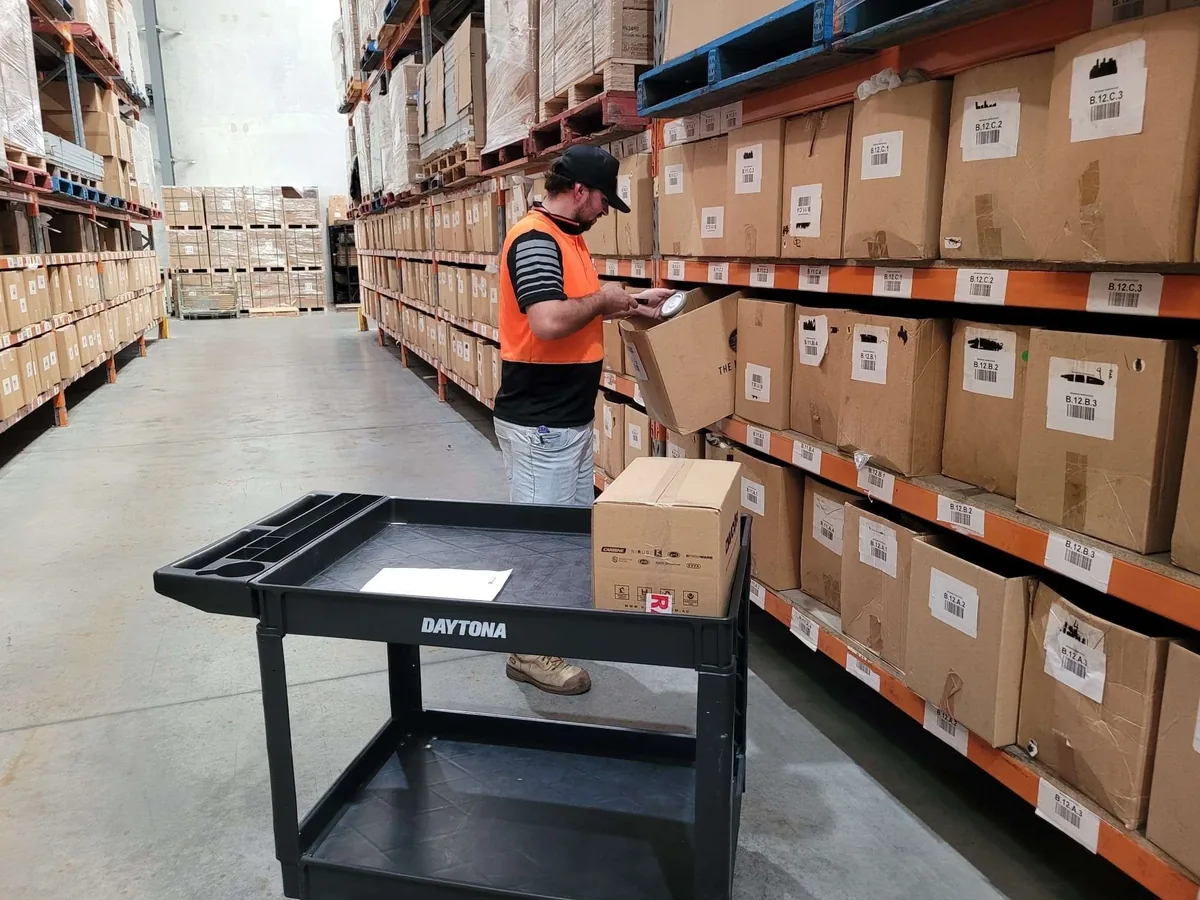
Most businesses do not switch 3PL providers on a whim. Usually it follows months of late dispatches, stock that does not match the system, slow answers to simple questions or a provider that simply cannot keep up with growth. By the time the decision is made, the business is often keen to move as quickly as possible.
That urgency is understandable, but rushing is where most problems start. A well-planned move can be almost invisible to your customers. A poorly planned one can mean lost stock, missed orders and a flood of “where is my parcel?” emails. This guide walks through switching 3PL providers step by step, so you can change partners without disrupting your business.
Signs It Is Time to Switch 3PL Providers
Every provider has the occasional bad day. These are signs of a bigger problem:
- Ongoing picking and packing errors, leading to wrong items, missing items and returns
- Inventory that does not match what the system says, causing stockouts or overselling
- Missed dispatch cut-offs and slow delivery times
- Poor visibility, with no real-time access to orders, stock or tracking
- Slow or unhelpful communication when issues arise
- No capacity to grow, whether that is space, peak season labour or new sales channels
- Costs that keep creeping up without a matching improvement in service
- Limited coverage, such as no warehouses near your customers in other states
If several of these sound familiar, it may be time to look elsewhere. If you are not sure whether a 3PL is still the right model, our guide to 2PL vs 3PL vs 4PL can help.
Before You Give Notice
Review your current contract
Check the notice period, any minimum term, exit fees and what the agreement says about releasing stock and data. Some agreements allow a provider to hold goods until outstanding invoices are paid, so settle or agree any disputed charges early. If anything is unclear, get legal advice before you act. Before making the move, it is also worth reviewing the 3PL costs involved in storage, handling, fulfilment and other services to understand how your expenses may change with a new provider.
Confirm what data you own
Make sure you can get a full export of your product data, stock levels, order history and returns records, in a usable format, before the relationship ends.
Choose your new provider before you leave
Never give notice until your new 3PL service provider has been selected, contracted and has confirmed space and a start date. Ask how they handle onboarding, who your main contact will be and what they need from you. Our article on how 3PL transforms Australian retail businesses includes a checklist for evaluating providers.
A Step-by-Step Plan for Switching 3PL Providers
1. Build a transition team and timeline
Appoint one person in your business to own the project, and agree a single point of contact at your new provider. Map out a timeline working back from the go-live date, with clear owners for each task.
2. Clean up your product and inventory data
Your new 3PL needs accurate data from day one. Check that every SKU has a correct description, barcode, dimensions, weight, carton quantity and any batch, serial or expiry requirements. A transition is the ideal time to remove obsolete SKUs and fix errors you have lived with for years.
3. Set up and test integrations
Connect your e-commerce platform, marketplaces, ERP or accounting system to the new provider’s systems, along with carrier accounts and tracking. Then test thoroughly: push through sample orders, check stock syncs correctly, confirm tracking numbers flow back to customers and test returns.
4. Agree processes and service levels
Document how you want orders picked and packed, including packaging, inserts, gift notes and special handling. Agree dispatch cut-off times, receiving times and reporting, and set the KPIs you will measure, such as order accuracy, dispatch on time and inventory accuracy.
5. Plan the stock transfer
Decide whether to move everything at once or in phases. A phased move, starting with slower-moving lines or one sales channel, lowers risk but takes longer. Whichever you choose:
- Do a full stock count at the old warehouse before goods leave
- Use clear labelling and paperwork for every pallet and carton
- Book transport well ahead, especially for interstate moves
- Count and check everything again on arrival
- Hold extra safety stock of best sellers so you can keep selling during the move
6. Redirect inbound stock
Tell your suppliers and freight forwarders the new delivery address and receiving requirements, and time purchase orders so new stock arrives at the new warehouse rather than the old one. Update any advance shipping notices and booking processes.
7. Communicate with customers and partners
Most customers do not need to know you have changed 3PLs, but they do need to know about any short delay. Let key wholesale customers, marketplaces and your customer service team know the plan, and update return addresses on your website and packaging.
8. Go live and monitor closely
For the first few weeks after go-live, check orders, stock and dispatch every day. Hold regular check-ins with your new provider, fix issues quickly and compare performance against the KPIs you agreed.
Typical 3PL Transition Timeline
Every move is different, but a typical transition takes around 6 to 12 weeks. As a general guide:
| Stage | Typical timing | Key tasks |
|---|---|---|
| Planning | Weeks 1 to 2 | Contract review, project team, timeline, data export |
| Set-up | Weeks 2 to 6 | Data clean-up, integrations, processes, testing |
| Stock transfer | Weeks 5 to 9 | Stock count, transport, receiving, reconciliation |
| Go-live | Weeks 8 to 10 | Switch order flow, redirect inbound stock, close monitoring |
| Settling in | Weeks 10 to 12 | KPI review, fine-tuning, exit from old provider |
Simple, single-warehouse e-commerce businesses can often move faster, while multi-site operations or businesses with complex products may need longer.
Choose the Right Time to Switch
Timing can make or break a transition. Avoid moving during your peak periods, which for many Australian businesses means the lead-up to Black Friday, Cyber Monday and Christmas, and end of financial year sales in June. Aim for a quieter month, and allow a buffer in case anything takes longer than planned.
Common Mistakes When Switching 3PL Providers
| Mistake | How to avoid it |
|---|---|
| Giving notice before the new 3PL is ready | Sign with the new provider and confirm a start date first |
| Moving stock without a full count | Count before dispatch and again on arrival |
| Skipping integration testing | Run test orders through every channel before go-live |
| Switching in peak season | Plan the move for a quieter period |
| Forgetting inbound stock | Redirect suppliers and purchase orders early |
| Poor communication | Keep your team, partners and key customers informed |
How TLC Enterprise Helps Businesses Switch
At TLC Enterprise, we know that changing logistics partners can feel daunting. Our team works with you to plan the move, set up integrations, transfer stock and get your orders flowing smoothly from our warehouses.
- Warehousing in major cities, including Melbourne (Truganina), Sydney, Brisbane, Adelaide and Perth
- Live visibility on orders, inventory and transport tracking
- E-commerce integration to connect your sales channels
- A dedicated account management team and regular reviews
- One partner for warehousing, fulfilment, transport, freight forwarding, returns and custom packaging
Planning a 3PL Switch?
If your current logistics partner is holding your business back, TLC Enterprise can help you plan a smooth, low-risk transition.
Call 1300 343 751 or email bookings@tlcenterprise.com.au to talk through your requirements.
Frequently Asked Questions
Most transitions take around 6 to 12 weeks, depending on the number of products, sales channels and locations involved, and how much data clean-up is needed.
With good planning, most customers will not notice anything. A short slowdown in dispatch is possible during the stock transfer, so plan for it and communicate if needed.
Yes, in most cases. Holding extra stock of best sellers, moving in phases and timing the move carefully help you keep trading.
Not always. A phased move lowers risk, while a single move is faster. The right choice depends on your range, order volume and how much downtime you can accept.
Ask about their onboarding process, integrations, receiving times, dispatch cut-offs, reporting, KPIs, peak season capacity and who your main contact will be.
It depends on your agreement. Check the notice period, minimum term and exit fees, and get legal advice if needed.